

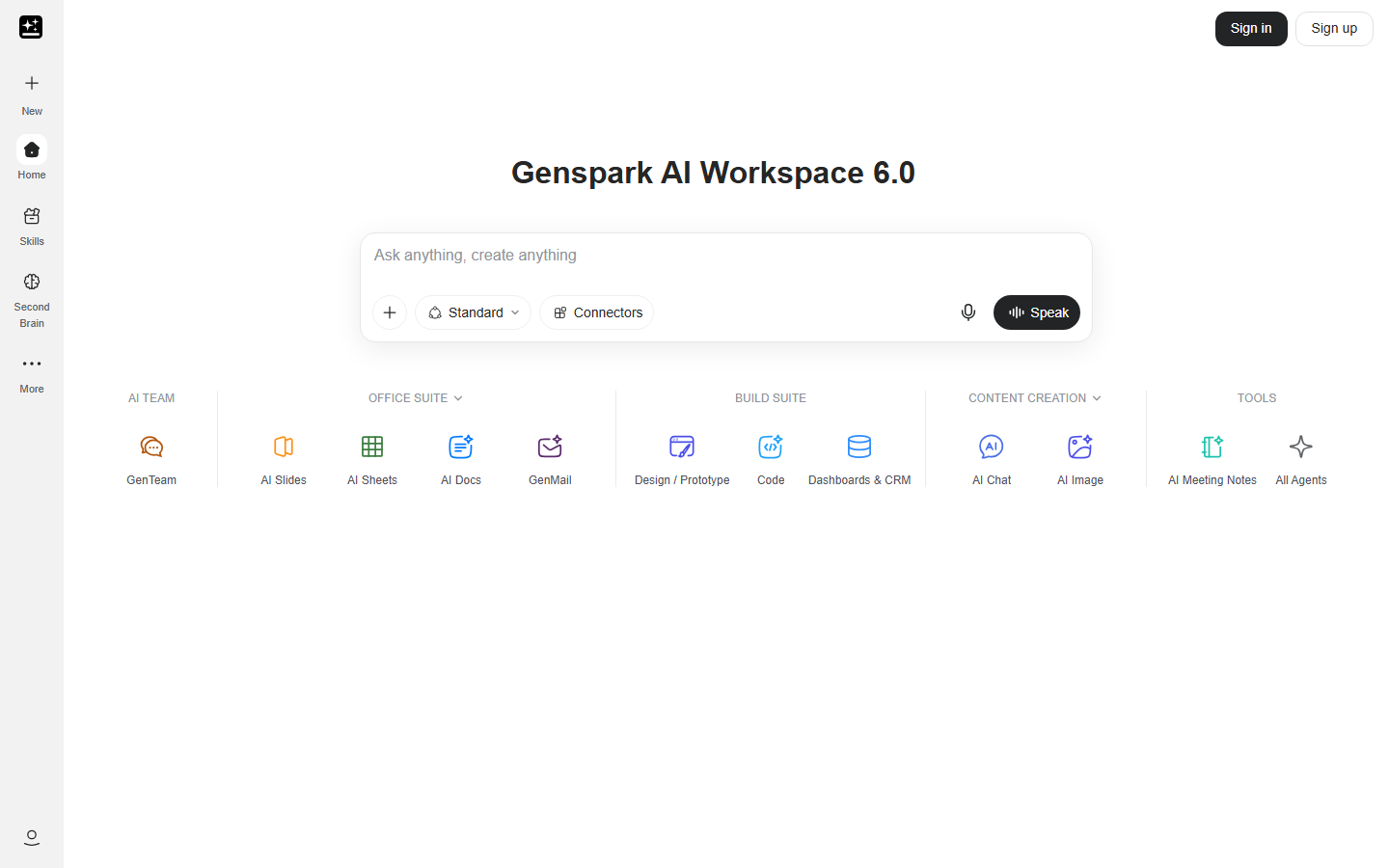
The podcasting industry encompasses over 4 million active podcasts globally, creating significant competition for audience attention. Success requires not just engaging content, but thorough research, efficient preparation, and consistent quality. Genspark AI offers capabilities that can transform your podcast research workflows.
In This Guide
What is Genspark AI?
Genspark AI is a platform leveraging a team of AI agents to assist with search, deep research, and various tasks. The platform delivers trustworthy information through its agentic engine.
Key Features
- Deep Research: Processing vast amounts of information quickly to extract valuable insights
- Autonomous AI Agents: Multiple specialized AI models working together on complex research tasks
- Trustworthy Information: Focus on reliable, fact-checked content from credible sources
Why Podcasters Need Advanced Research Tools
| Challenge | How AI Helps |
|---|---|
| Content differentiation | Identifies unique angles and underexplored topics |
| Building audience trust | Ensures factual, well-sourced content |
| Time efficiency | Reduces hours of research to minutes |
| Guest preparation | Creates comprehensive briefings quickly |
Core Applications for Podcast Research
1. Topic Research and Discovery
Genspark’s mixture-of-agents approach analyzes trending topics, identifies knowledge gaps, and discovers unique angles.
Example use case: A technology podcaster can analyze AI advancements across research papers, industry news, and expert opinions to uncover emerging trends before competitors.
2. Guest Research and Preparation
Input a guest’s name and background; Genspark compiles comprehensive information across multiple platforms.
Time savings: AI tools can reduce guest research time by 75-90%, transforming a 2-3 hour task into 15-30 minutes.
3. Fact-Checking and Source Verification
Submit claims or statistics for verification against multiple reliable sources. This maintains credibility and prevents factual inaccuracies that could damage podcast reputation.
4. Creating Comprehensive Show Notes
Compile key points, references, and resources into organized, linkable show notes that enhance SEO and audience discovery.

Advanced Research Techniques
Competitive Analysis
Analyze competitor podcasts to identify:
- Content patterns and gaps
- Guest selection strategies
- Topic coverage and angles
- Underserved niches to target
Audience Research
Analyze online community conversations to identify:
- Recurring questions your audience has
- Common concerns and pain points
- Interests within your target demographic
Creating a Research Database
Save and organize research findings for future reference, building a cumulative knowledge repository that reduces redundant work across episodes.
Content Repurposing
Extend research value by creating additional content formats. Content repurposing can generate up to 38 different marketing pieces from a single episode, maximizing research ROI.
Step-by-Step Interview Preparation Workflow
| Step | Task | Time |
|---|---|---|
| 1 | Initial Guest Research | 15-20 min |
| 2 | Topic Refinement | 10 min |
| 3 | Question Development | 15 min |
| 4 | Fact Sheet Creation | 10 min |
| 5 | Show Notes Preparation | 15 min |
| Total | ~65-70 min |
Comparison: Traditional preparation typically requires 3-4 hours for the same depth of research.

Best Practices for Using Genspark
Do
- Start with clear research questions rather than general topics
- Cross-check critical facts and verify pivotal information
- Use research to inform, not replace, your unique perspective
- Iterate and refine using follow-up questions
Don’t
- Copy AI-generated content verbatim
- Skip verification of important claims
- Let AI replace your authentic voice
- Rely on AI for real-time or breaking news
“AI should help you shape up your ideas rather than replacing your perspective.” — Chris Zappone, Digital Media Expert
Balancing AI and Human Touch
The most successful podcasters use AI as a research assistant, not a replacement for human insight.
How to Maintain Authenticity
- Use AI for information gathering; add your perspective for analysis
- Share personal experiences related to research findings
- Connect facts to stories that resonate with audiences
- Focus on authentic connections with guests rather than scripted knowledge display
“Podcasting is a powerful tool for building and strengthening relationships with your audience.” — John Lee Dumas
Effective Genspark Prompts for Podcasters
Guest Research
Research [Guest Name] comprehensively, including their professional
background, recent projects, published opinions on [topic], and
interesting personal details that could spark conversation.
Topic Research
Identify emerging trends in [industry] that aren't being covered by
major podcasts yet. Include potential expert sources and data points.
Fact-Checking
Verify the following claim and provide supporting or contradicting
evidence from credible sources: [claim]
Show Notes
Create comprehensive show notes for an episode about [topic] including
key points, timestamps framework, and relevant links.
Tips for Maximizing AI Research
- Be specific with details for tailored responses
- Iterate using follow-up questions to refine results
- Combine approaches to create customized research
- Provide context about your audience and podcast goals
- Request citations for verification
Conclusion
Genspark AI enables podcasters to produce deeply researched, factually accurate content in significantly less time. The most successful approach combines powerful research capabilities with your authentic voice and perspective. Great research feeds directly into great structure — see our guide on podcast episode structure to put it all together.
Getting started: Begin with guest research for an upcoming episode, then gradually expand your use of the tool as your comfort increases.
Want to focus on content while we handle production? See how Podigy can help you create professional podcasts efficiently.